Posts

Showing posts with the label Act 3

Godwin's 2016 RSC Production: Act Three
Image
As we move into Act III (which is the longest part of this production running at 44 minutes), the stage is draped in enormous canvases, hanging down from the ceiling and spread across the floor. They suggest Hamlet's mania from their volume, and the preoccupations of his troubled mind in the calligramatic references to serpents, crowns and skulls. The concept of the tortured artist is constructed visually before it is enacted. Rosencrantz and Guildenstern's incompetence is suggested through their casual behaviour at the start of the scene, giving the idea that they don't really have their minds on the job, but are treating their time here as a holiday. Essiedu's Hamlet embarks on the 'To be or not to be' speech with a plaintive, questioning tone. You can explore the RSC's approach to this in more depth here . When Ophelia enters she is evidently still smarting from their previous exchange and attempts to return a large box of gifts and keepsakes fr...
Act III, scene iv: A rash and bloody deed

Image
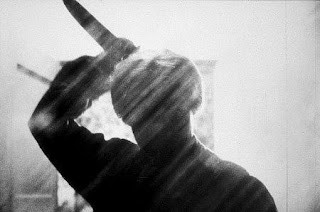
Now we reach the point of no return for Hamlet - the pivot on which the rest of the play turns. And there is plenty of drama. Having toyed with the idea of murder in the previous scene, his is driven to murderous action in this one - before his father's ghost reappears. The scene opens with Polonius' antagonistic imperatives to the Queen - about how to speak to her son, in order to 'lay home' aspects of his behaviour and 'tell him' that it will no longer be tolerated (III.iv.1-2) - before Polonius secretes himself behind the arras. But a suggestion that Gertrude has mediated on Hamlet's behalf hovers on the air, that she 'hath screen'd and stood between/Much heat and him' (III.iv.3-4). Hamlet, though, is evidently unaware of any such intercession. When he arrives, the dialogue with his mother provides what is possibly my favourite exchange of the play.  Queen Hamlet, thou has thy father much offended. Hamlet Mother, you have m...

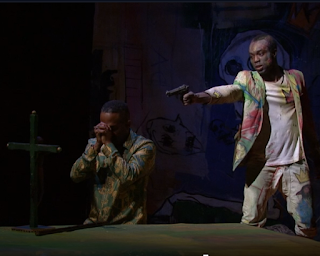
Act III, scene iii: Bow, stubborn knees

Image
Rosencrantz and Gildenstern enter with the King, who confirms his decision to send Hamlet to England with them. It is framed as a protective measure: it would be dangerous 'To let his madness range' (III.iii.2) and it will not do for the King's safety to be compromised, since the fortune of the king determines that of his subjects. This belief is acknowledged by Rosencrantz 'Never alone/Did the King sigh, but with a general moan' (III.iii.22-23), but as ever, dramatic irony is at play here. The divine right theory of kingship (which asserted that kings derived their authority from God, and supported the idea of hereditary monarchy) and Chain of Being (a Christian concept codifying the religious hierarchical structure of all life and matter) have been disrupted. Both were significant ideas in terms of Elizabethan philosophy and ideas about World Order; Claudius is a usurper, not a rightful ruler. Next, Polonius enters, reiterating his intention to 'conve...